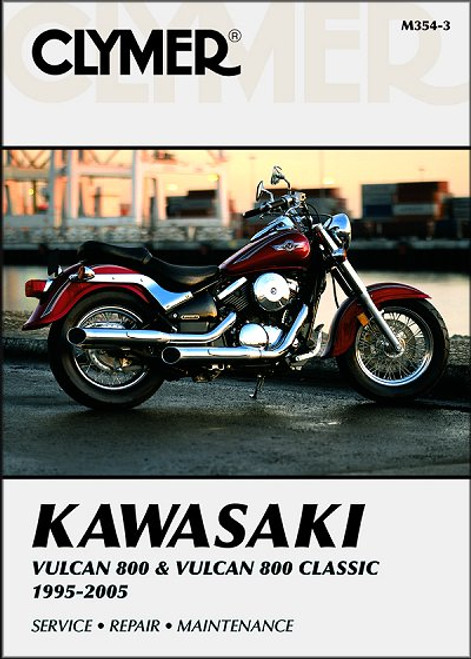


The 1974-1995 Kawasaki KZ400, KZ, Z440, EN450, EN500 repair manual by Clymer covers:
Book Excerpt: 1974-1995 Kawasaki KZ400, KZ, Z440, EN450, EN500 Repair Manual COOLING SYSTEMS
BRAKES
Subject: 1974, 1975, 1976, 1977, 1978, 1979, 1980, 1981, 1982, 1983, 1984, 1985, 1986, 1987, 1988, 1989, 1990, 1991, 1992, 1993, 1994, 1995 Kawasaki KZ400, KZ, Z440, EN450, EN500 service, maintenance, repair. ISBN-10: 0892876794 | ISBN-13: 9780892876792 | Clymer M355
- Kawasaki KZ400A, KZ400S, 1974-1978 US
- Kawasaki KZ400B, 1978-1980 U.S., Canada, Europe
- Kawasaki KZ400C, 1978 U.S.
- Kawasaki KZ400G, 1980-1981 U.S., Canada, Europe
- Kawasaki KZ400H, 1979-1981 U.S., Canada, Europe
- Kawasaki KZ400A, KZ400D, 1980-1983 U.S., Canada
- Kawasaki KZ440B, 1980-1981 U.S., Canada
- Kawasaki KZ440C, 1982-1983 U.S., Canada
- Kawasaki KZ440G, 1982-1983 U.S., Canada
- Kawasaki KZ440H, 1982-1983 Europe
- Kawasaki Z440A, Z440C, Z440D, 1980-1983 Europe
- Kawasaki EN450A (454LTD), 1985-1990
- Kawasaki EN500A (Vulcan 500), 1990-1995
Book Excerpt: 1974-1995 Kawasaki KZ400, KZ, Z440, EN450, EN500 Repair Manual COOLING SYSTEMS
WATER PUMP: REMOVAL/INSTALLATION
- Drain the engine oil as described in Chapter Three.
- Drain the cooling system as described in Chapter Three.
- Shift the transmission into first gear.
- Remove the right-hand foot peg assembly mounting bolts. Pull the foot peg assembly away from the frame and allow it to hang down.
- Loosen the clamp on the water pump cover radiator hose (Figure 7). Then twist the hose and slide it off the cover neck.
- With the water pipe attached to the water pump cover, cover bolts and cover (Figure 15).
BRAKES
This chapter describes repair and replacement procedures for all brake components. (Refer to Tables 1-4 for brake wear limits. Tables 1-8 are found at the end of the chapter.) FRONT DISC BRAKES The front disc brake is actuated by hydraulic fluid controlled by the hand lever on the right-hand side of the handlebar. As the brake pads wear, the brake fluid level drops in the master cylinder reservoir and automatically adjusts for pad wear. However, brake lever free play must be maintained. Refer to Front Brake Lever Adjustment in Chapter Three. When working on a hydraulic brake system, it is necessary that the work area and all tools be absolutely clean. Any tiny particles of foreign matter or grit on the caliper assembly or the master cylinder can damage the components. Also, sharp tools must not be used inside the caliper or on the caliper piston. If there is any doubt about your ability to correctly and safely carry out major service on the brake components take the job to a Kawasaki dealer or brake specialist.
Subject: 1974, 1975, 1976, 1977, 1978, 1979, 1980, 1981, 1982, 1983, 1984, 1985, 1986, 1987, 1988, 1989, 1990, 1991, 1992, 1993, 1994, 1995 Kawasaki KZ400, KZ, Z440, EN450, EN500 service, maintenance, repair. ISBN-10: 0892876794 | ISBN-13: 9780892876792 | Clymer M355
TABLE of CONTENTS:
- Chapter One: General Information
- Chapter Two: Troubleshooting
- Chapter Three: Lubrication, Maintenance and Tune-up
- Chapter Four: Engine
- Chapter Five: Clutch and Transmission
- Chapter Six: Fuel, Power Valve and Exhaust Systems
- Chapter Seven: Ignition System
- Chapter Eight: Cooling System
- Chapter Nine: Front Suspension and Steering
- Chapter Ten: Rear Suspension
- Chapter Eleven: Brakes
- Chapter Twelve: Suspension Adjustment
- Wiring Diagrams