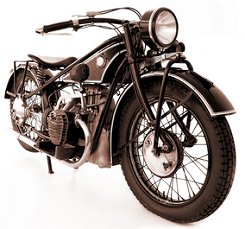
Setting Up Your Motorcycle Workshop
Tips for the Do-It-Yourself Home Mechanic

Planning Your Workshop

You've got the bike. Now, you are thinking about setting up a motorcycle workshop. The first thing you need to consider is the purpose of the shop. Are you going to use the workshop to do oil changes and routine maintenance on your motorcycle? Do you expect to use the workshop to repairs? Do you want to use your workshop to customize a bike? Or, do you plan to build a racing bike? What are your motorcycling and motorcycle workshop goals? As you proceed with planning your workshop, you may want to learn from the experiences of other people and read one of the excellent books written about this topic.

For the purposes of this article, we are going to make some assumptions. The first is that you are a motorcycle hobbyist. You enjoy riding your motorcycle. You also enjoy tinkering. You want to set up your motorcycle workshop so you can tinker on your bike and maybe save a few bucks in the process. By far, most bike workshops begin this way. Later, if you really enjoy working on bikes, you may find yourself doing this kind of work for friends and acquaintances. From there your workshop may grow into either a part-time business or a full-time career. Many bike repair shops, custom shops and racing shops began just this way.

As a do-it-yourselfer (DIY), one of the first challenges you will likely find in setting up your workshop for your motorcycle is space. Do you dedicate space in your garage, even if it means a car sits outside? Do you have space in a tool shed or utility building? Will you need to build an addition onto your garage or other structure? Will you need to rent space for your motorcycle workshop?

When you have decided on the space you will have available, it is time to break out the pencil and paper. Begin with making a scale drawing of the space you will have available. Begin drawing in the spaces you will set aside for workbenches, tool cabinets, air compressor and so on. It is a lot easier to erase and change your layout than it is to move work benches and heavy tools.

The next challenge for the DIY is equipping the motorcycle workshop. What tools will you need right away? Do you have to buy all new tools? Do you already have some of the tools you need? Do you have access to tools owned by a friend or family member? Many people find it easier on both themselves and their budget to begin with a few basic tools and then add to them over time.

Tips On Setting Up Your Motorcycle Workshop
  1. Space. Design your workspace. You will want tools and tool storage conveniently located, yet have enough space so that you do not feel cramped and the workspace cluttered.

  2. Electricity. Plan your anticipated electrical usage. You will need overhead shop lights. You will also need directional lighting or stand lights to illuminate specific work areas. Will you use an electrical heater? How about a welder or other equipment using 230 volts of electricity? Will you install and air conditioner? How is the ventilation in the workshop area? Will you need to install ventilation fans to remove exhaust and other noxious fumes? Will you need to install an additional power service box or can you get by with adding another circuit or two to an existing service panel?

  3. Ventilation. It is extremely important that you have adequate ventilation. Even if you only plan to change motor oil and perform routine maintenance on your bike, you will have to deal with gasoline fumes. You may also plan to do tune-ups and repair work. You will have exhaust fumes that will need to be vented out of the building along with the fumes from cleaning solvents and similar materials.

  4. Basic tools storage. Design your basic hand tools storage so the tools are convenient and organized. You are setting up your motorcycle workshop so you can enjoy working on your bike, not spend half of your time looking for the wrench or gauge you need.

  5. Air tools. In recent years air tools have come a long way. You will likely need an air compressor to maintain tire pressure and to help clean parts. You may want to consider a larger compressor that will operate an assortment of power tools.

  6. Welding equipment. If you get into repair work, you may want to add welding equipment to your workshop. Welding equipment is valuable in repairing exhaust systems and cracks or breaks in the frame or kick stand. You can use the heat from an oxygen-acetylene torch to do brazing and help free excessively tight nuts and bolts. MIG or arc welders will require three-phase 230 volt electricity.

  7. Sandblasting, cleaning and painting. If you plan to do restoration or custom work on bikes you will also need an area and equipment for sandblasting and spray painting.
Whether you are a novice or an experienced motorcycle rider, working on your bike adds to the enjoyment of owning it. If you live in colder climates you can enjoy the time working on your bike during those months when it is too cold to ride. Perhaps all you need is a small space where you can change oil, store a few basic tools and keep your repair manual. Perhaps you are going to build a full-scale custom or racing shop. These simple tips will help you plan the motorcycle workshop that will best fit your needs.


Save on shipping charges


The Motor Bookstore - Automotive Repair & Service Manuals
404 Newtech Court, DeBary, FL 32713-4841 U.S.A.
Open Monday to Friday from 9:00 am to 4:00 pm EST
Toll-Free: 1-800-982-4599 - Local: 386-668-6363

INDEX | SITE SECURITY | PRIVACY | AFFILIATES | TERMS of USE | CONTACT

We accept PayPal, Visa, Mastercard, American Express, Optima & Discover

Copyright © 1997-2009 The Motor Bookstore


Setting Up Your Motorcycle Workshop Tips for the Do-It-Yourself Home Mechanic

Search our Site

The Motor Bookstore Coupons on tjoos.com